Bringing Plants Inside? Don't Bring Fungus Gnats With Them
September 27, 2026 · Pests
It's that time of year… the nights are getting cooler, and many of us are bringing our potted plants back inside for the winter. Unfortunately, those plants can bring some unwanted guests in with them. Fungus gnats are one of the most common pests of indoor plants, and fall is the perfect time to stop them before they get started.
Fungus gnats are tiny, dark flies, about 1/16 to 1/8 inch long, that are sometimes mistaken for mosquitoes. They're harmless to people, but they can be a real headache for anyone with houseplants. The adults like to swarm around your plants (and your kitchen window!), while their larvae feed on plant roots and organic matter in the potting soil.
The fungus gnat life cycle
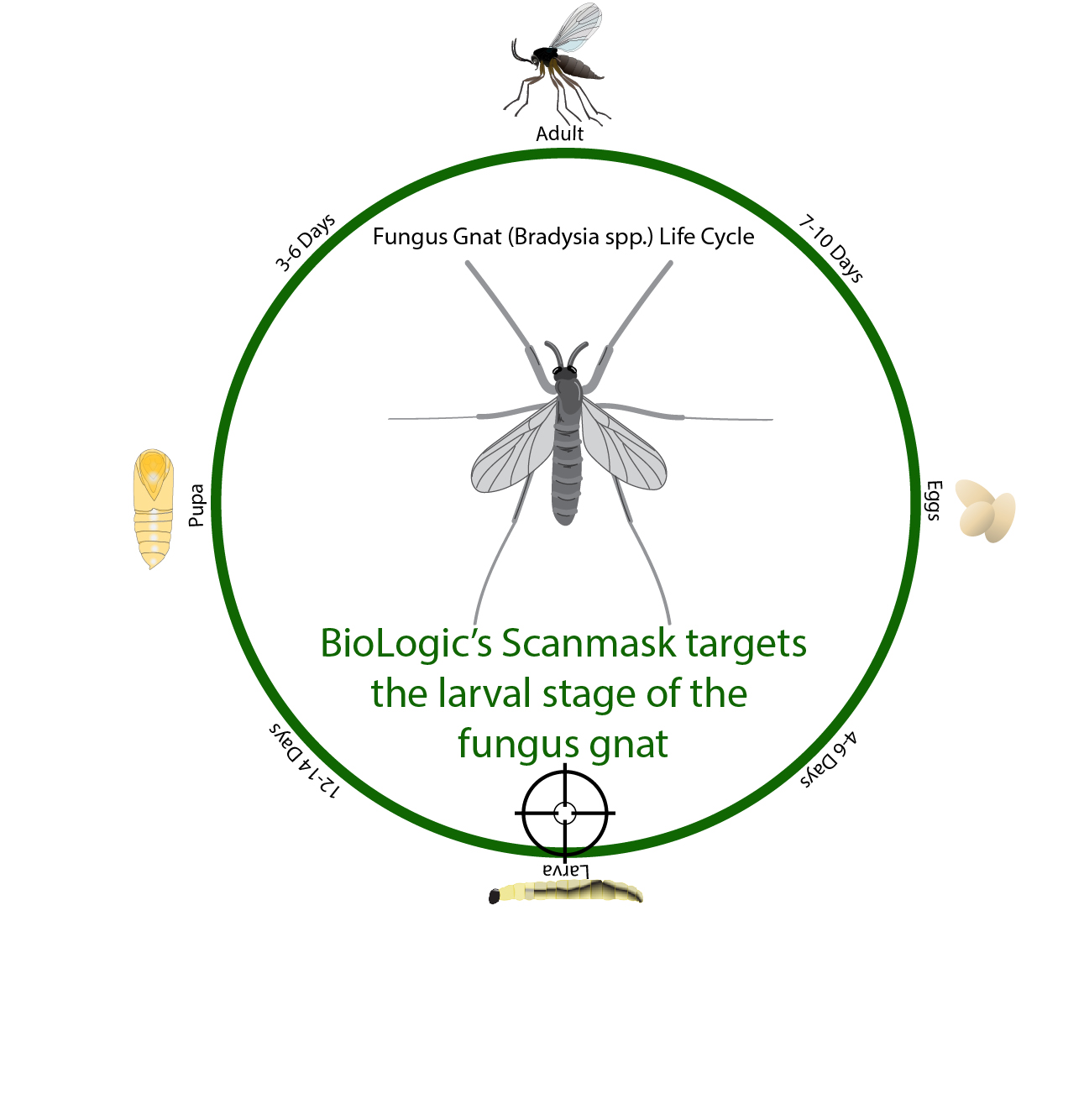
Fungus gnats multiply fast. A female can lay up to 200 eggs in her short life. The eggs are laid on the soil surface and hatch within a few days, and the larvae feed in the soil for about 2 weeks before they pupate. According to the University of California's IPM program, a whole new generation can be produced in about 17 days, which is why a small fungus gnat problem can soon become a big (and highly irritating) one.
How to check for fungus gnats
Here's a neat trick from UC IPM: press a few slices or chunks of raw potato lightly into the soil. Fungus gnat larvae find them irresistible, so after a few days, flip the potato over and look for tiny, see-through larvae with black heads. A small yellow sticky card stuck in the pot will catch the adults, too.
A natural way to stop them
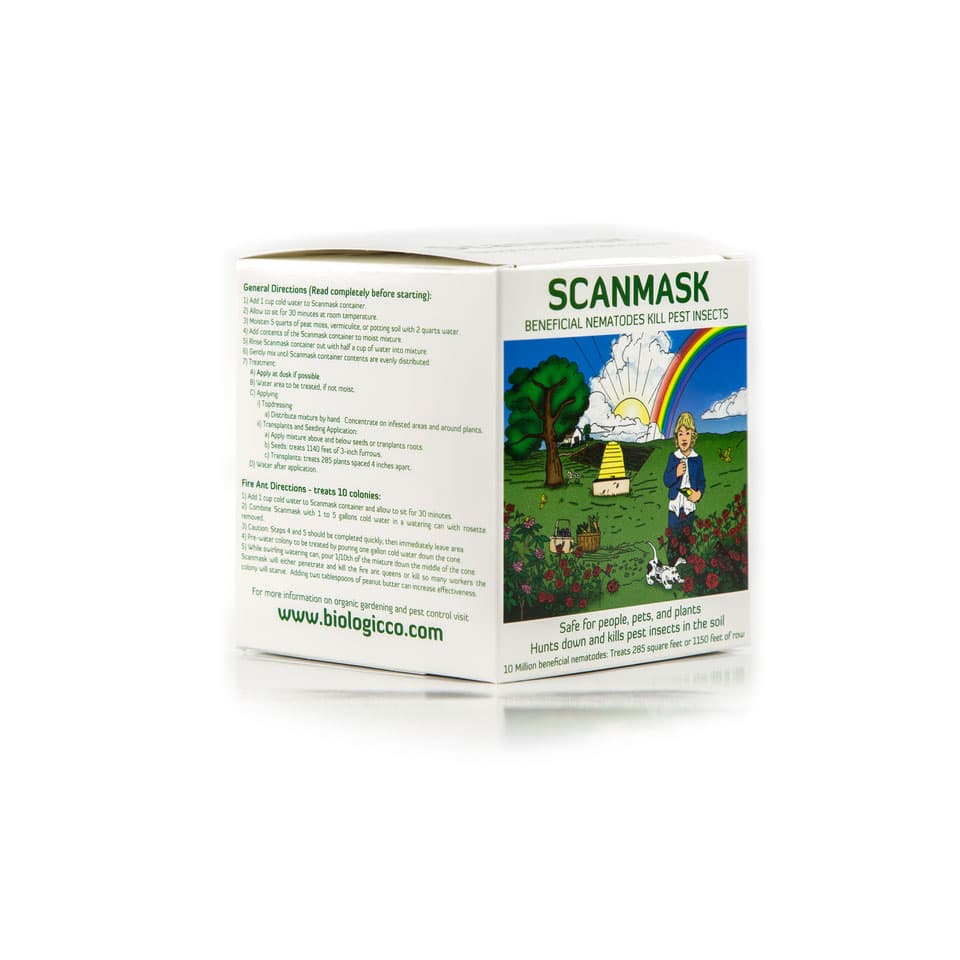
The beneficial nematodes in Scanmask hunt down and kill fungus gnat larvae right in the potting soil, so they never grow up to lay more eggs. Scanmask nematodes are Steinernema feltiae, and UC IPM notes that this species is more effective against fungus gnats than other commercially available nematodes. Existing adults die off on their own in about a week, so you should see fewer and fewer gnats over the next couple of weeks. Keep watching for gnats coming back, and if they do, simply treat again.
We recommend treating at about 25,000 nematodes per square foot of soil surface. Scanmask comes as a spray that you water into the soil, or as a topdressing you mix into potting soil. Even our smallest package of Scanmask Spray covers a lot of houseplants! The "How much do I need?" calculator on the Scanmask Spray page shows which size fits your plants.
A few tips to keep fungus gnats from coming back:
- Treat plants before you bring them inside, and treat any new plants you buy. They can already have gnats in the soil.
- Don't overwater. Fungus gnats love moist soil, so let the surface of the soil dry out between waterings.
- Use fresh, bagged potting mix when you repot, rather than garden soil or old compost.
- Treat every plant in the room, not just the one where you see gnats.
Best of all, Scanmask is all natural and completely safe for people, pets, and plants, so you can use it right in your living room. See How to apply for step-by-step directions. For more on fungus gnats, see Getting rid of fungus gnats and Protect your poinsettias.
Now is the perfect time to treat your plants with Scanmask, before they come inside for the winter!
Happy gardening!
Pest ID: Fungus Gnat