

Ecomask Spray
Our recommended nematode for fleas, and a hardy choice for hot, dry climates.
From $37.99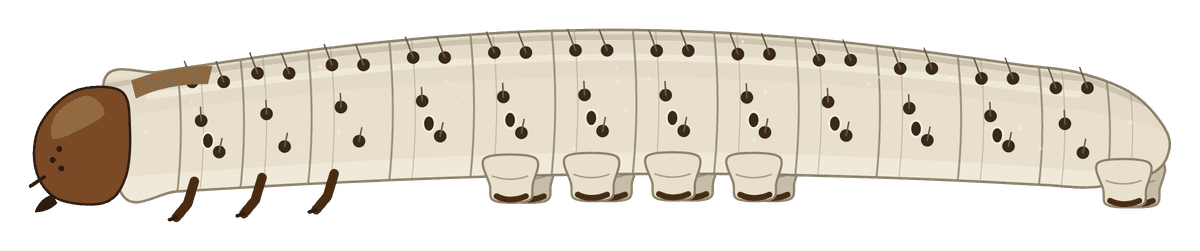
Opogona sacchari
A moth whose caterpillars bore into the stems of potted tropical plants like dracaena, yucca, and palms.
Adults are shiny, brownish-gray moths about half an inch long with long antennae. Larvae are dirty white caterpillars up to an inch long with a shiny brown head.
Caterpillars tunnel into canes, stems, and bulbs, leaving soft, hollow, rotting tissue. Wilting and frass (sawdust-like waste) at the stem base are common signs. Plants can collapse.
The caterpillars feed at the base of the stem and in the potting mix, and they turn into pupae in the soil or in their stem tunnels, where nematodes can reach them.
In a Florida study on infested potted palms, Heterorhabditis bacteriophora (the nematode in Heteromask) and S. feltiae (the nematode in Scanmask) cut the number of caterpillars by 58 to 100%. Steinernema carpocapsae (the nematode in Ecomask) hasn't been tested on this moth yet, but it's a common choice for caterpillars that tunnel into stems.
In university research, the timing that worked best was whenever the caterpillars are active. Indoors and in greenhouses, that can be any month. Repeat every 2 to 3 weeks if fresh frass shows up.
Treat with Ecomask. Heteromask also works.
When: Anytime the larvae are active.
Where: Drench the potting mix and spray the stem base and any bore holes.
See How to apply for step-by-step directions, or use the calculator on the Ecomask Spray page to see how much you need.
Our recommended nematode for fleas, and a hardy choice for hot, dry climates.
From $37.99
Our recommended nematode for white grubs, including Japanese beetle and European chafer grubs.
From $37.99
Ecomask, our flea nematode, in a granular form you mix with peat moss or potting soil and spread by hand.
$59.99