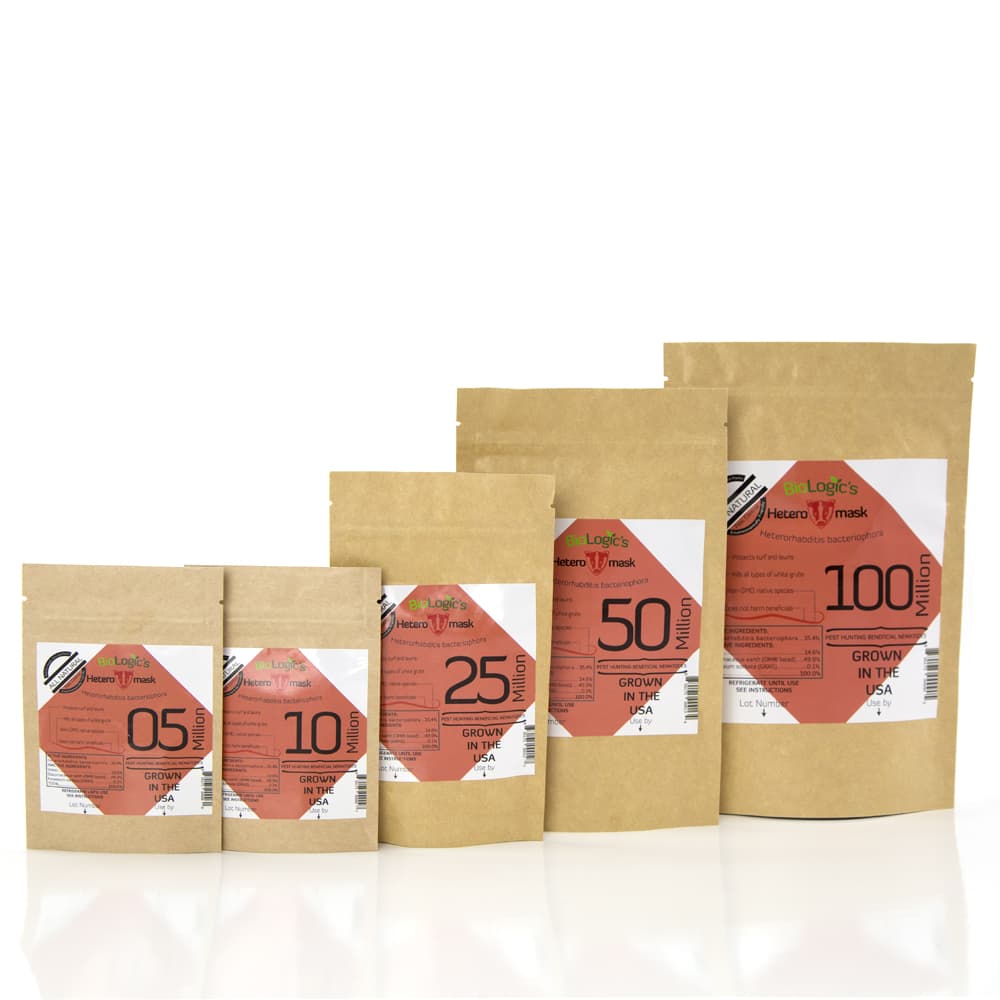
Heteromask Spray
Our recommended nematode for white grubs, including Japanese beetle and European chafer grubs.
From $37.99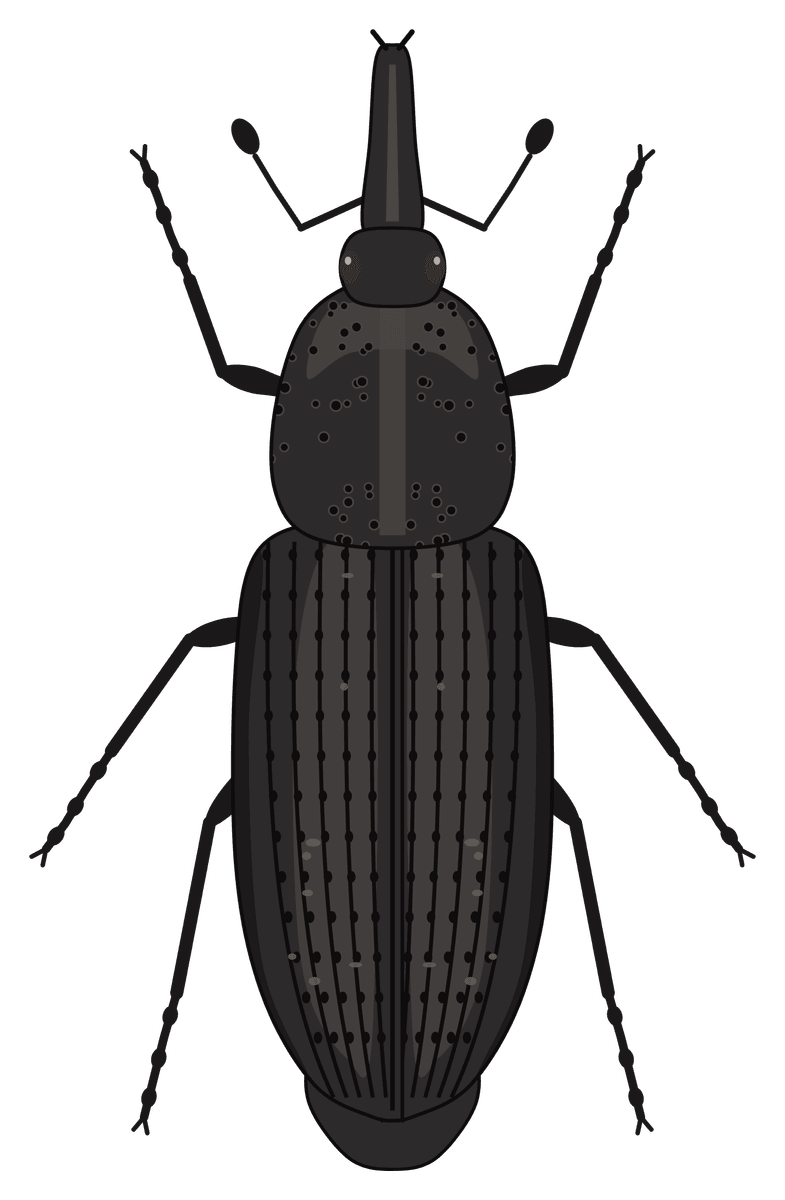
Sphenophorus spp.
Weevils whose larvae hollow out grass stems and eat the crowns and roots, leaving brown patches that don't green up with watering.
Billbugs are weevils with a long snout. The bluegrass billbug is the common one in northern lawns; the hunting billbug is the main one in the South, especially in zoysia, Bermuda, St. Augustine, and centipede grass.
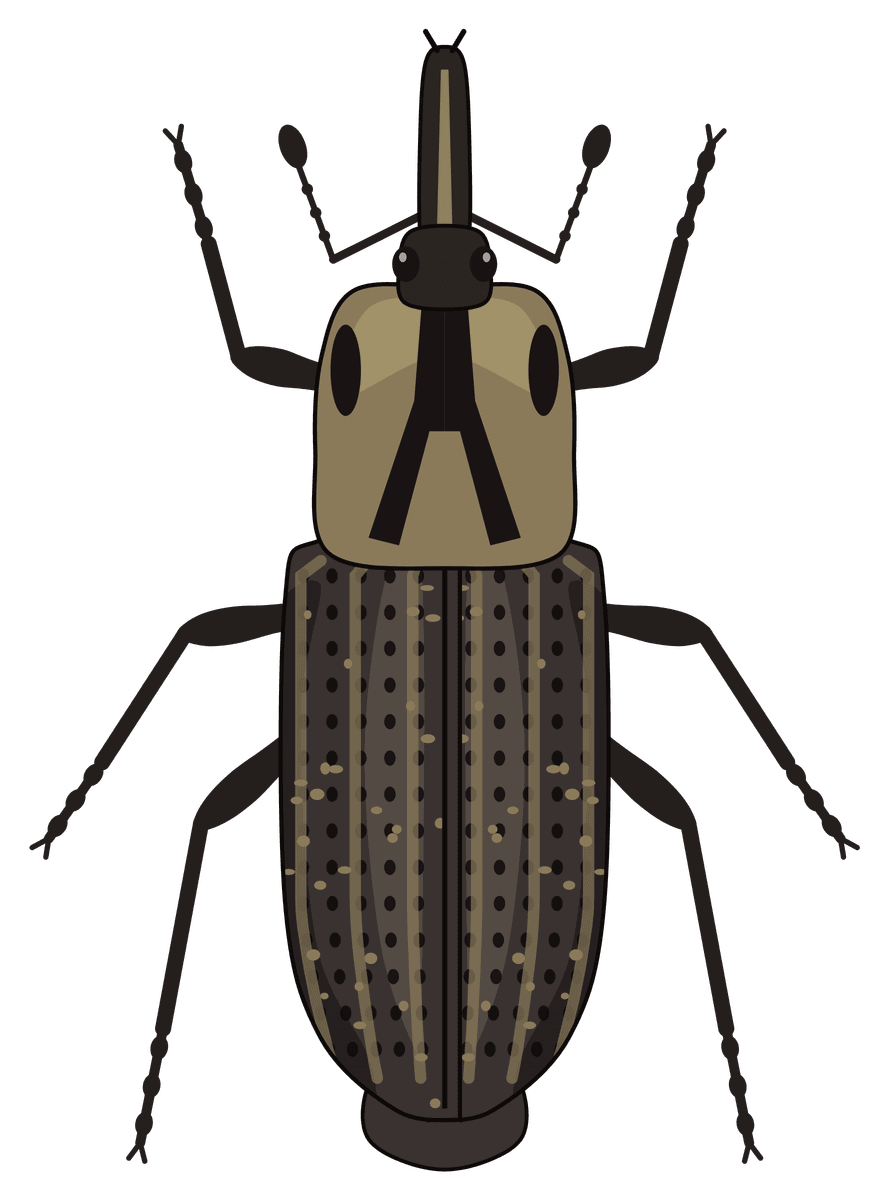
A hunting billbug. The picture at the top is a bluegrass billbug.
The larvae are small, legless, and cream-colored with a brown head. Young larvae feed inside grass stems, then older larvae move down to the crown and roots. In the North, adults are often seen crossing sidewalks and driveways in late May and early June.
Billbug damage shows as brown patches that don't green up when you water. Damage often starts along sidewalks and driveways. Pull on the grass: damaged stems break off easily at the crown, and they're hollow and packed with fine, sawdust-like droppings.
Both Heteromask and Ecomask attack billbug larvae in the soil and thatch, and research rates them about equally. Killing the larvae while they're young stops the damage before it spreads.
Treat with Heteromask from May to August, or in early spring and late summer. Ecomask also works. Aim for young larvae: late June to early July in the North, and late spring to early summer in the South.
Focus on damaged areas, especially sunny spots along sidewalks and driveways.
See How to apply for step-by-step directions, or use the calculator on the Heteromask Spray page to see how much you need.
Our recommended nematode for white grubs, including Japanese beetle and European chafer grubs.
From $37.99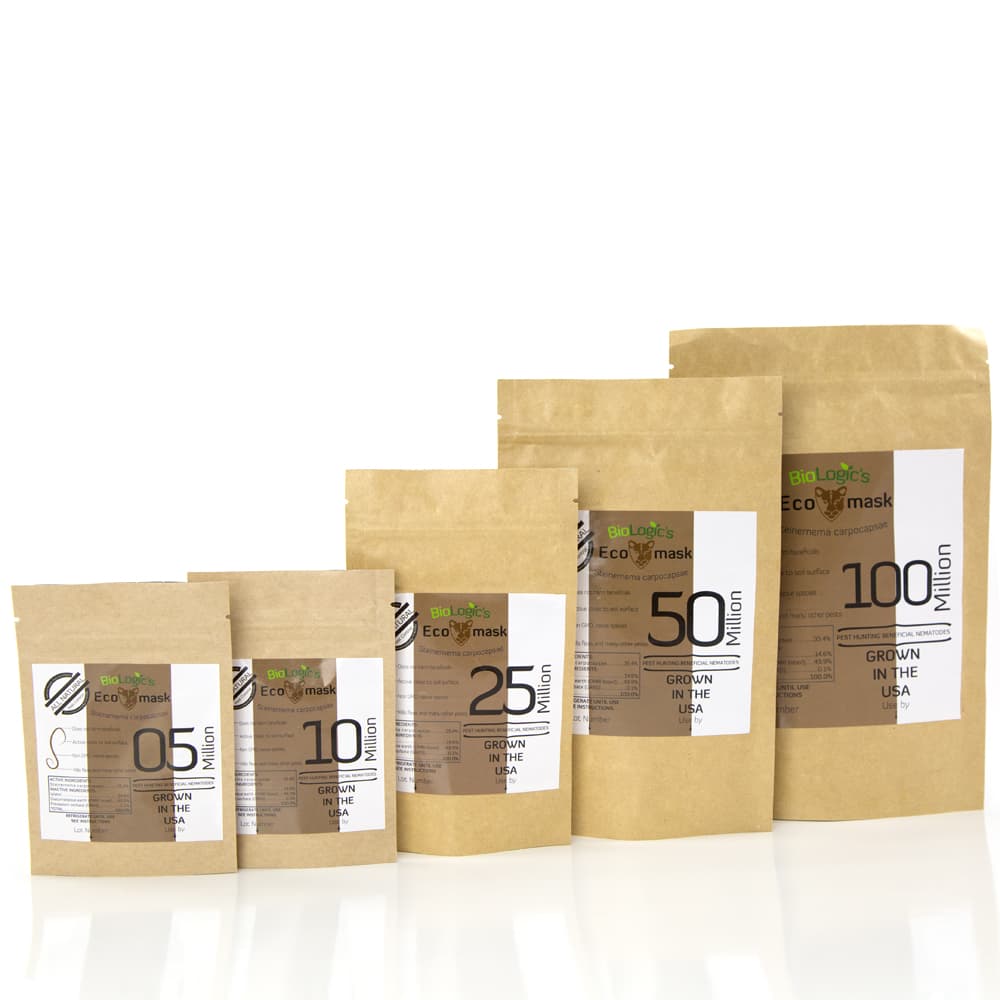
Our recommended nematode for fleas, and a hardy choice for hot, dry climates.
From $37.99
Ecomask, our flea nematode, in a granular form you mix with peat moss or potting soil and spread by hand.
$59.99