

Scanmask Spray
Kills the widest range of pests. Our pick for several pests at once or for preventing them.
From $37.99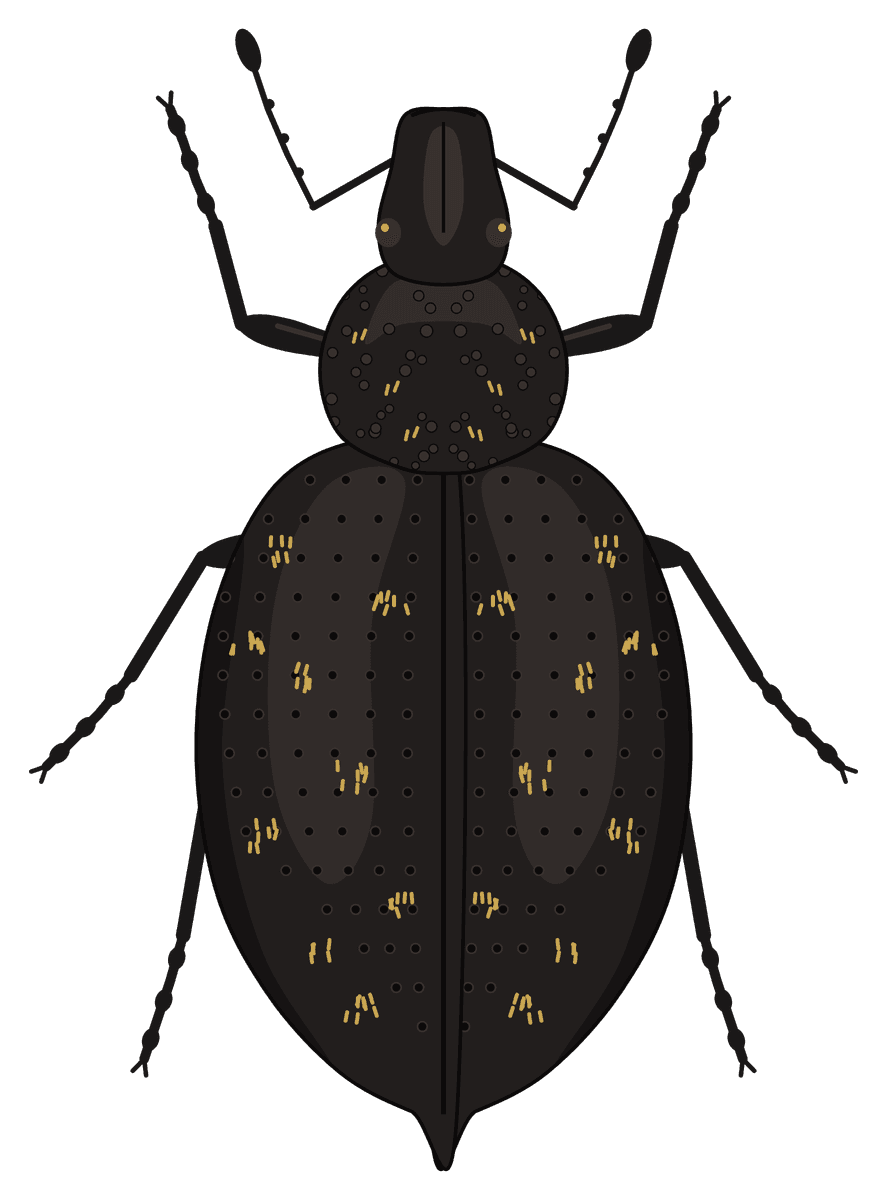
Otiorhynchus sulcatus
Large, flightless gray or black weevils that feed at night, and root-eating larvae that cause wilting, stunted growth, and plant death in shrubs and potted plants.
Black vine weevils are one of the most widespread and destructive root weevils. Adults are about ½ inch long (⅜ to ½ inch), gray or black, and can't fly. They have a distinctive snout and elbowed (bent) antennae. Strawberry root weevils look very similar, but black vine weevils are about twice their size.
Adults feed at night and hide in plants, mulch, or garden debris during the day. They lay their eggs in the soil in spring, up to 500 eggs in just 2 to 3 weeks. The eggs hatch into tiny larvae a week or two later. The larvae feed on roots until the weather cools in the fall, spend the winter in the soil, and start feeding again in early spring before changing into pupae and then new adults. Black vine weevils have one generation per year.
Both adults and larvae damage more than 100 kinds of plants, indoors and outdoors, and especially plants in the cyclamen family. The larvae do the most harm. As they feed through the roots, plants wilt, stop growing, and can die. The larvae feed from midsummer to early fall, and again in early spring.
Adults do most of their damage in spring and early summer, but it's mostly on the surface of the leaves.
The beneficial nematodes in Scanmask hunt down and kill black vine weevil larvae in the soil. Killing the weevils as larvae stops the life cycle, so new adults don't emerge.
Treat with Scanmask, applied to the soil in the drip zone around affected shrubs and plants. Ecomask and Heteromask also work once the soil warms to about 68°F.
Apply while the larvae are active: from early spring through June, or in late summer and early fall.
See How to apply for step-by-step directions, or use the calculator on the Scanmask Spray page to see how much you need.
Kills the widest range of pests. Our pick for several pests at once or for preventing them.
From $37.99
The same Scanmask we've sold since 1985, mixed with peat moss or potting soil and spread by hand. Keeps up to a year in the fridge.
From $42.99
Our recommended nematode for fleas, and a hardy choice for hot, dry climates.
From $37.99
Ecomask, our flea nematode, in a granular form you mix with peat moss or potting soil and spread by hand.
$59.99
Our recommended nematode for white grubs, including Japanese beetle and European chafer grubs.
From $37.99