

Ecomask Spray
Our recommended nematode for fleas, and a hardy choice for hot, dry climates.
From $37.99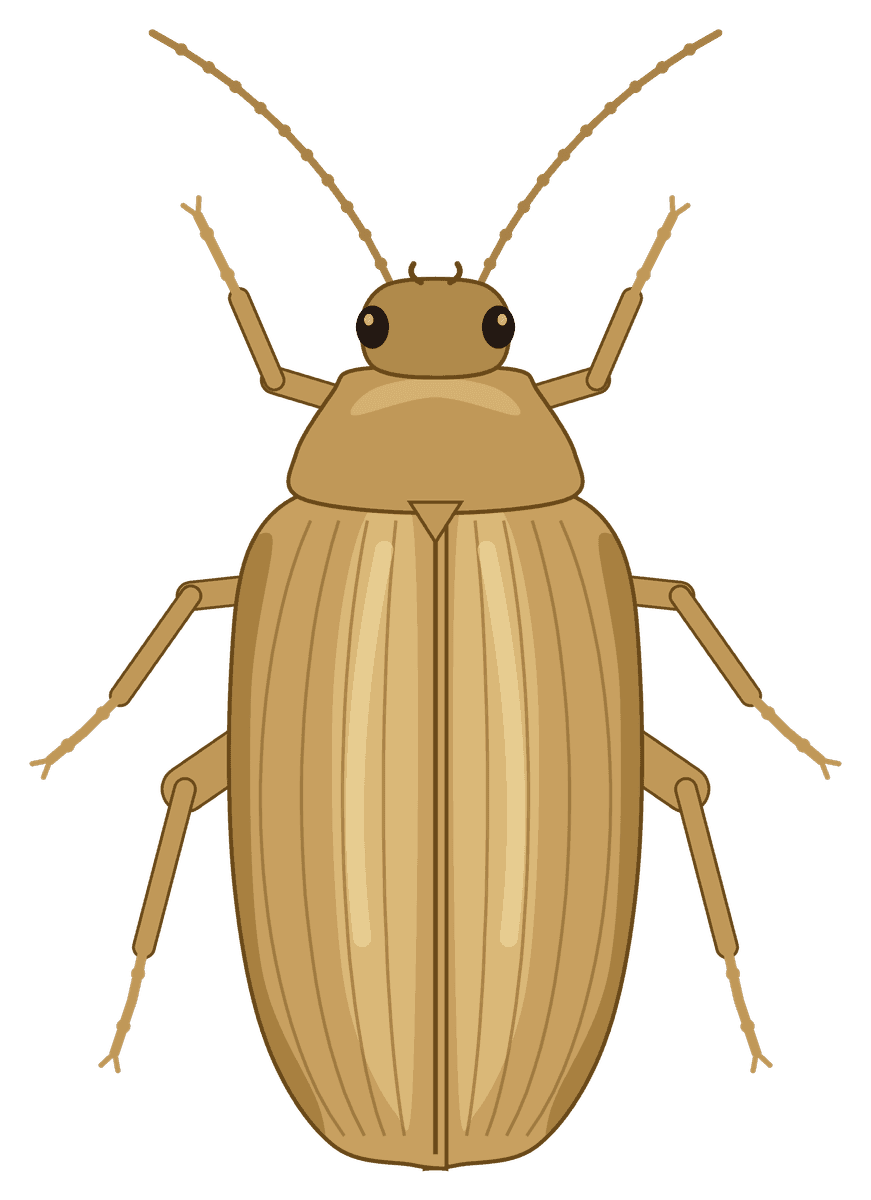
Longitarsus ferrugineus (formerly L. waterhousei)
A tiny jumping beetle whose larvae feed on mint roots and whose adults chew holes in the leaves.
Adults are tiny, shiny, tan to reddish-brown beetles about 1/16 inch long that jump when disturbed. Larvae are small, slender, white grubs in the soil.
Adults chew small shot holes in mint leaves in summer. Larvae feed on roots and rhizomes in spring, which stunts plants and cuts oil yield.
The eggs spend the winter in the soil. In spring the larvae feed on the roots, then turn into pupae in the soil.
No published studies of nematodes against this beetle were found. Nematodes target the larvae, which live in the soil.
Extension guides time soil treatments for spring (April to June), when the larvae are feeding on roots.
Treat with Ecomask.
When: April to May.
Where: Spray the soil in the mint bed and water it in.
See How to apply for step-by-step directions, or use the calculator on the Ecomask Spray page to see how much you need.
Our recommended nematode for fleas, and a hardy choice for hot, dry climates.
From $37.99
Ecomask, our flea nematode, in a granular form you mix with peat moss or potting soil and spread by hand.
$59.99