

Ecomask Spray
Our recommended nematode for fleas, and a hardy choice for hot, dry climates.
From $37.99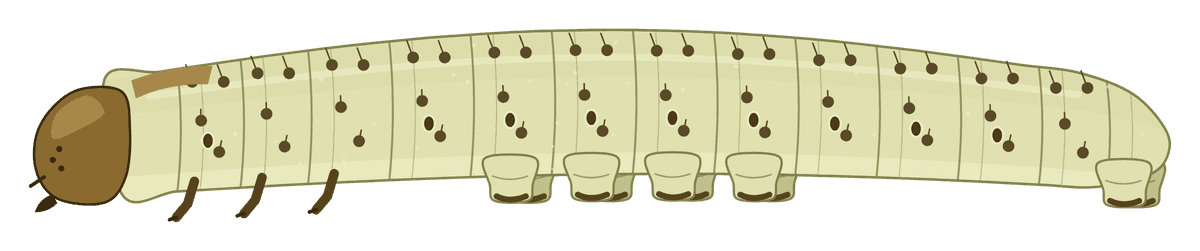
Fumibotys fumalis
A moth whose caterpillars bore into mint rhizomes and weaken or kill the stand.
Adults are small, dull brown-gray moths about 3/4 inch across. Larvae are pale yellowish-white to pinkish caterpillars with a brown head, up to about an inch long.
Larvae tunnel inside the rhizomes (underground stems) for 2 to 3 months in late summer and fall. Mint comes back thin and weak, with bare patches the next spring.
The caterpillars feed inside the rhizomes, down in the soil where nematodes can reach them. In the fall they build small, teardrop-shaped cases of silk and soil 1 to 2 inches deep, spend the winter inside, and turn into pupae there in spring.
In Oregon State University field trials, Steinernema carpocapsae (the nematode in Ecomask) lowered the number of borers, especially when it was applied before the mint was harvested.
In university research, the timing that worked best was August to early October, while the caterpillars are still feeding in the rhizomes and before they seal themselves into their winter cases.
Treat with Ecomask.
When: April to May, or August to early October.
Where: Spray the soil of the mint bed and water it in so nematodes reach the rhizomes.
See How to apply for step-by-step directions, or use the calculator on the Ecomask Spray page to see how much you need.
Our recommended nematode for fleas, and a hardy choice for hot, dry climates.
From $37.99
Ecomask, our flea nematode, in a granular form you mix with peat moss or potting soil and spread by hand.
$59.99