

Heteromask Spray
Our recommended nematode for white grubs, including Japanese beetle and European chafer grubs.
From $37.99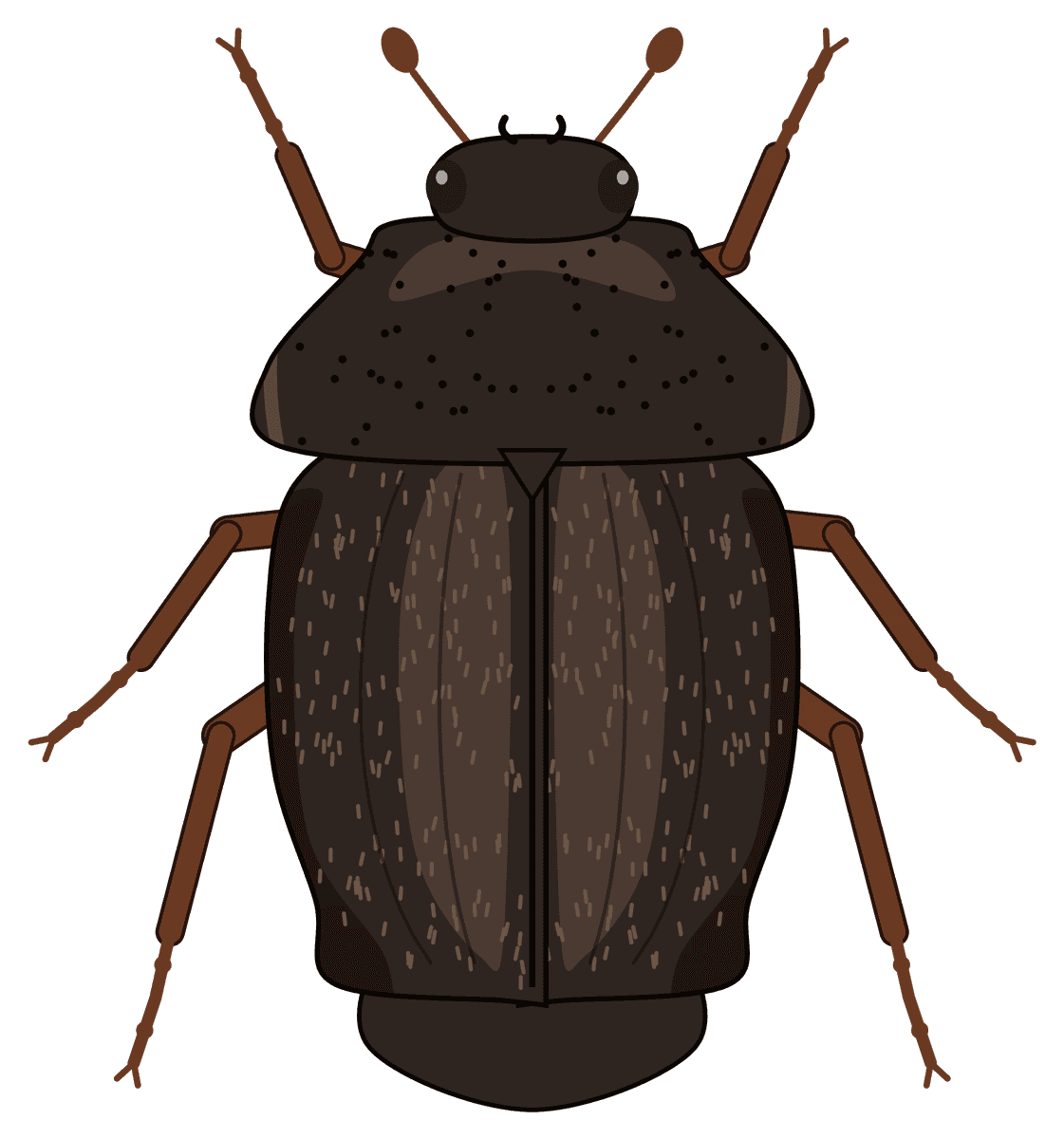
Aethina tumida
A beetle pest of honey bee hives whose larvae ruin comb and then crawl into the soil to pupate.
Adults are oval, dark brown to black beetles about 1/4 inch long with clubbed antennae. Larvae are cream colored grubs up to 1/2 inch long with rows of spines on their backs.
Larvae tunnel through comb, eat brood, honey, and pollen, and make honey ferment and run out of the cells. Heavy infestations can drive a colony out of the hive.
Full-grown larvae leave the hive and burrow 2 to 4 inches into the soil around it to pupate, which is where nematodes can reach them. The new adults come up out of the soil.
In a 2025 Australian study, every nematode species tested killed small hive beetles. H. indica (a species BioLogic doesn't sell) did best and S. feltiae (the nematode in Scanmask) did worst. In natural soil, nematodes cut the number of beetles coming out of the soil by 16 to 59%. The University of Arkansas says nematodes may help as part of an overall plan, depending on soil type and moisture.
In university research, the timing that worked best was late spring through early fall (May to September), when the beetles are active. Repeat every few weeks when there are a lot of beetles.
Treat with Heteromask.
When: Anytime the pests are active.
Where: Drench the soil under and in a few-foot ring around each hive. Keep the spray off the hive and the bees.
See How to apply for step-by-step directions, or use the calculator on the Heteromask Spray page to see how much you need.
Our recommended nematode for white grubs, including Japanese beetle and European chafer grubs.
From $37.99