
Scanmask Spray
Kills the widest range of pests. Our pick for several pests at once or for preventing them.
From $37.99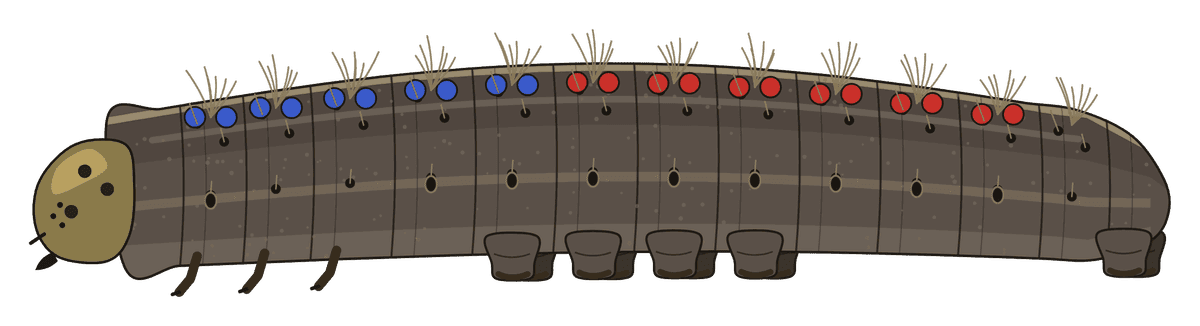
Lymantria dispar
An invasive moth (formerly called gypsy moth) whose hairy caterpillars strip the leaves from oaks and many other trees in late spring.
Males are brown moths and females are white, heavy, and do not fly. Older caterpillars are up to 2.5 inches long and hairy, with 5 pairs of blue dots and 6 pairs of red dots down the back.
Caterpillars eat leaves from May to early July and can strip whole trees in outbreak years. Repeated defoliation weakens and can kill oaks, especially stressed trees.
The caterpillars feed up in the trees, not in the soil. During the day, older caterpillars hide in bark cracks and in the leaf litter at the base of the tree, and some turn into pupae there. That's where nematodes can reach them.
In lab tests, S. feltiae (the nematode in Scanmask) killed spongy moth caterpillars, pupae, and adults, and the nematodes multiplied inside the dead caterpillars. No field studies were found showing that nematodes reduce spongy moth outbreaks.
In university research, the timing that worked best was late May through June, when the older caterpillars hide during the day near the base of the trunk and in the leaf litter.
Treat with Scanmask.
When: April to July.
Where: Spray the lower trunk, any burlap hiding bands, and the leaf litter under the tree in the evening.
See How to apply for step-by-step directions, or use the calculator on the Scanmask Spray page to see how much you need.
Kills the widest range of pests. Our pick for several pests at once or for preventing them.
From $37.99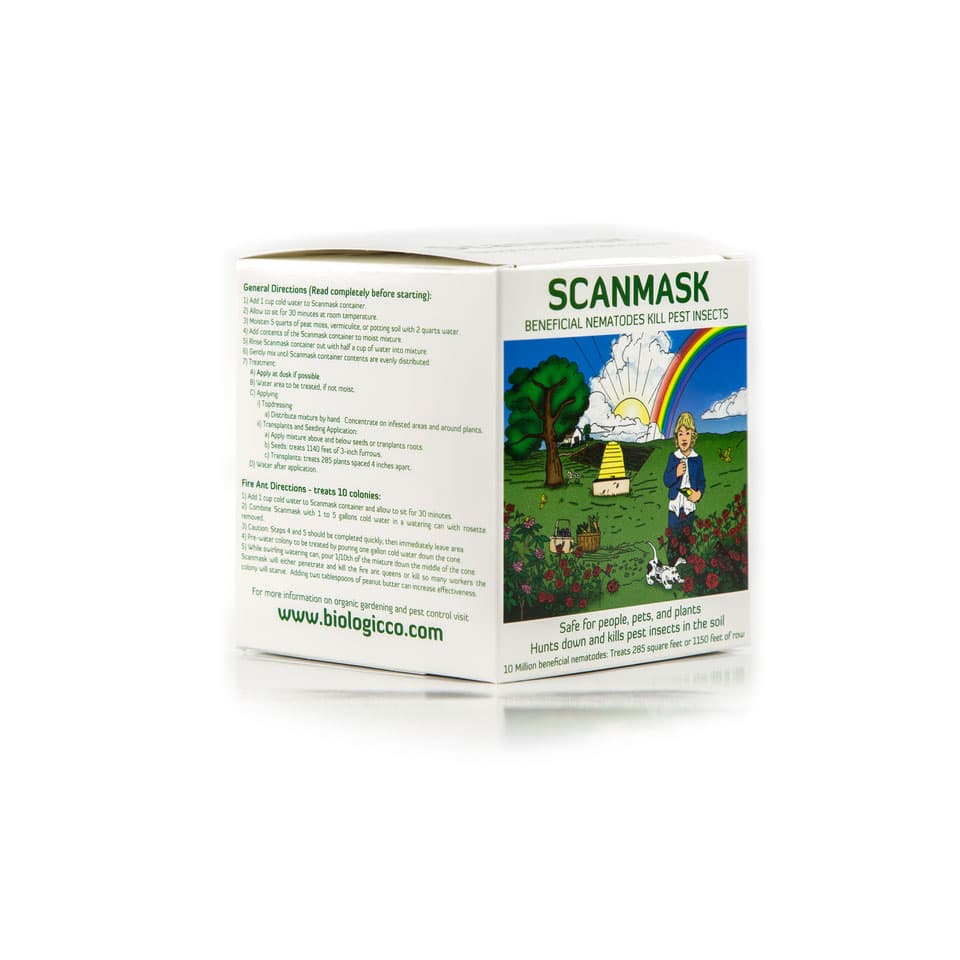
The same Scanmask we've sold since 1985, mixed with peat moss or potting soil and spread by hand. Keeps up to a year in the fridge.
From $42.99