

Scanmask Spray
Kills the widest range of pests. Our pick for several pests at once or for preventing them.
From $37.99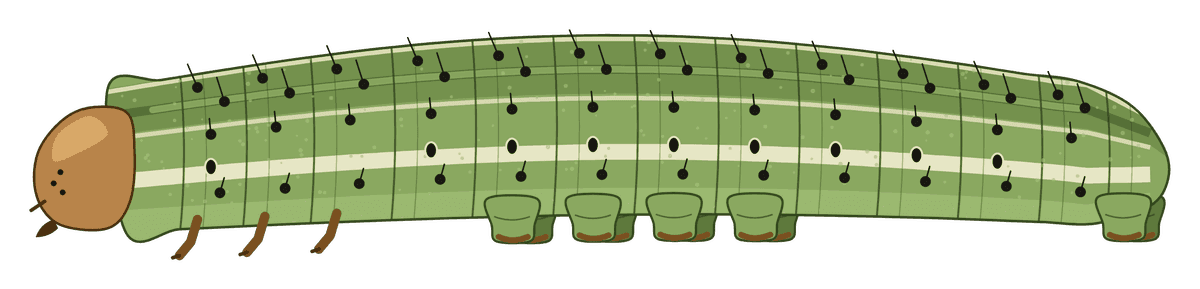
Chloridea virescens (formerly Heliothis virescens)
A caterpillar that eats the flower buds of petunias, geraniums, and nicotiana, and also attacks tobacco and cotton.
Adults are olive-green moths with three faint, slanted dark bands on the front wings. Larvae are green, red, or brown with light stripes and tiny spines, up to 1.5 inches long.
Caterpillars bore into flower buds and eat blooms, so plants flower poorly or not at all. Small holes in buds and dark frass are the signs. It is a major pest of bedding petunias and geraniums in midsummer.
Full-grown caterpillars drop from the plants and turn into pupae a few inches deep in the soil, where nematodes can reach them. Nematodes can't reach the caterpillars while they're inside the buds. In the South, the pupae spend the winter in the soil.
In cage tests in cotton fields, S. riobrave (a species BioLogic doesn't sell) cut the number of moths coming out of the soil by about two thirds. No field studies with S. feltiae (the nematode in Scanmask) were found.
In university research, the timing that worked best was mid to late summer (July to September), when the caterpillars finish feeding and drop to the soil to pupate, plus once in the fall to reach the pupae spending the winter there.
Treat with Scanmask.
When: March to September.
Where: Spray the soil in flower beds and containers under petunias, geraniums, and other host plants.
See How to apply for step-by-step directions, or use the calculator on the Scanmask Spray page to see how much you need.
Kills the widest range of pests. Our pick for several pests at once or for preventing them.
From $37.99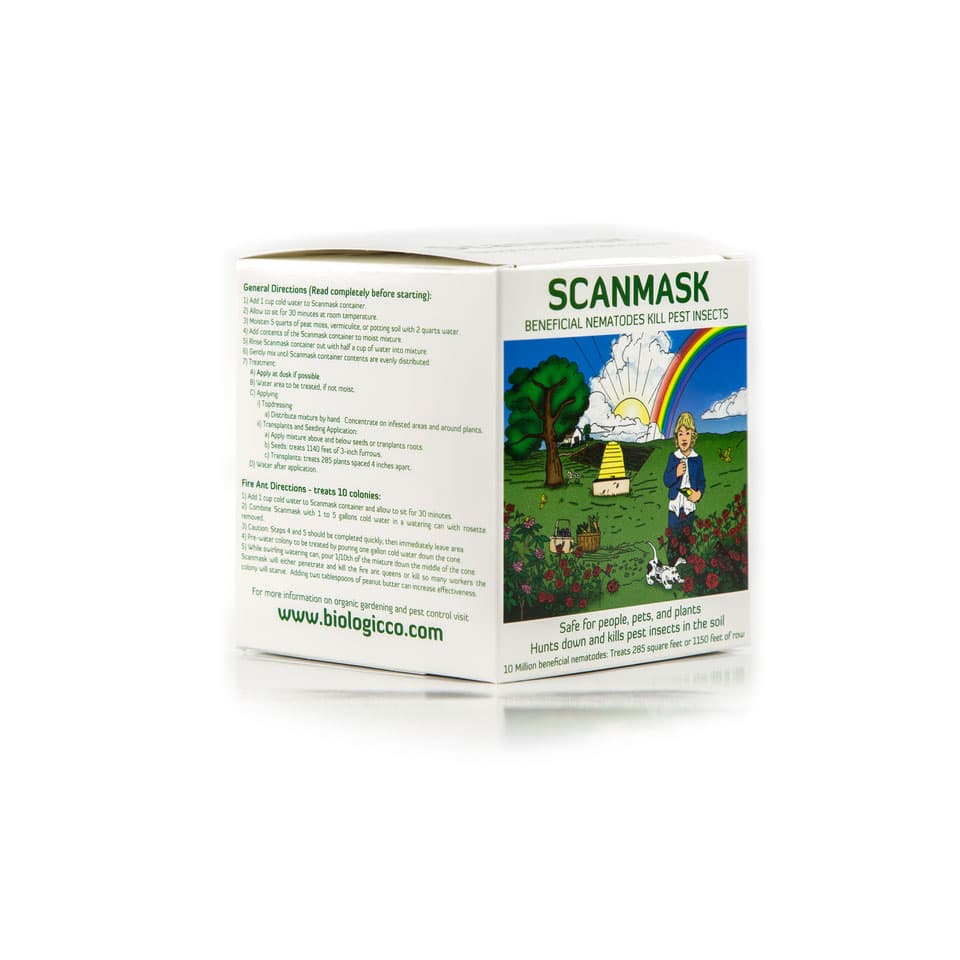
The same Scanmask we've sold since 1985, mixed with peat moss or potting soil and spread by hand. Keeps up to a year in the fridge.
From $42.99