
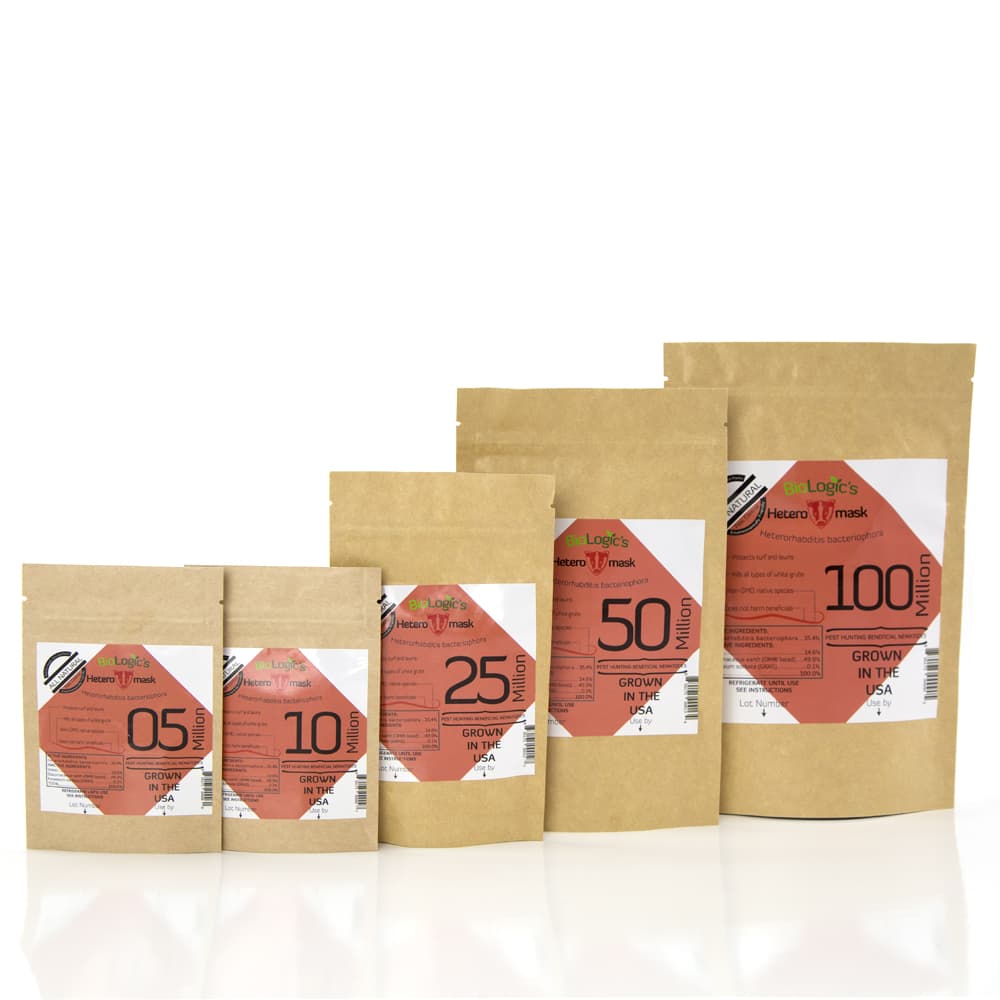
Heteromask Spray
Our recommended nematode for white grubs, including Japanese beetle and European chafer grubs.
From $37.99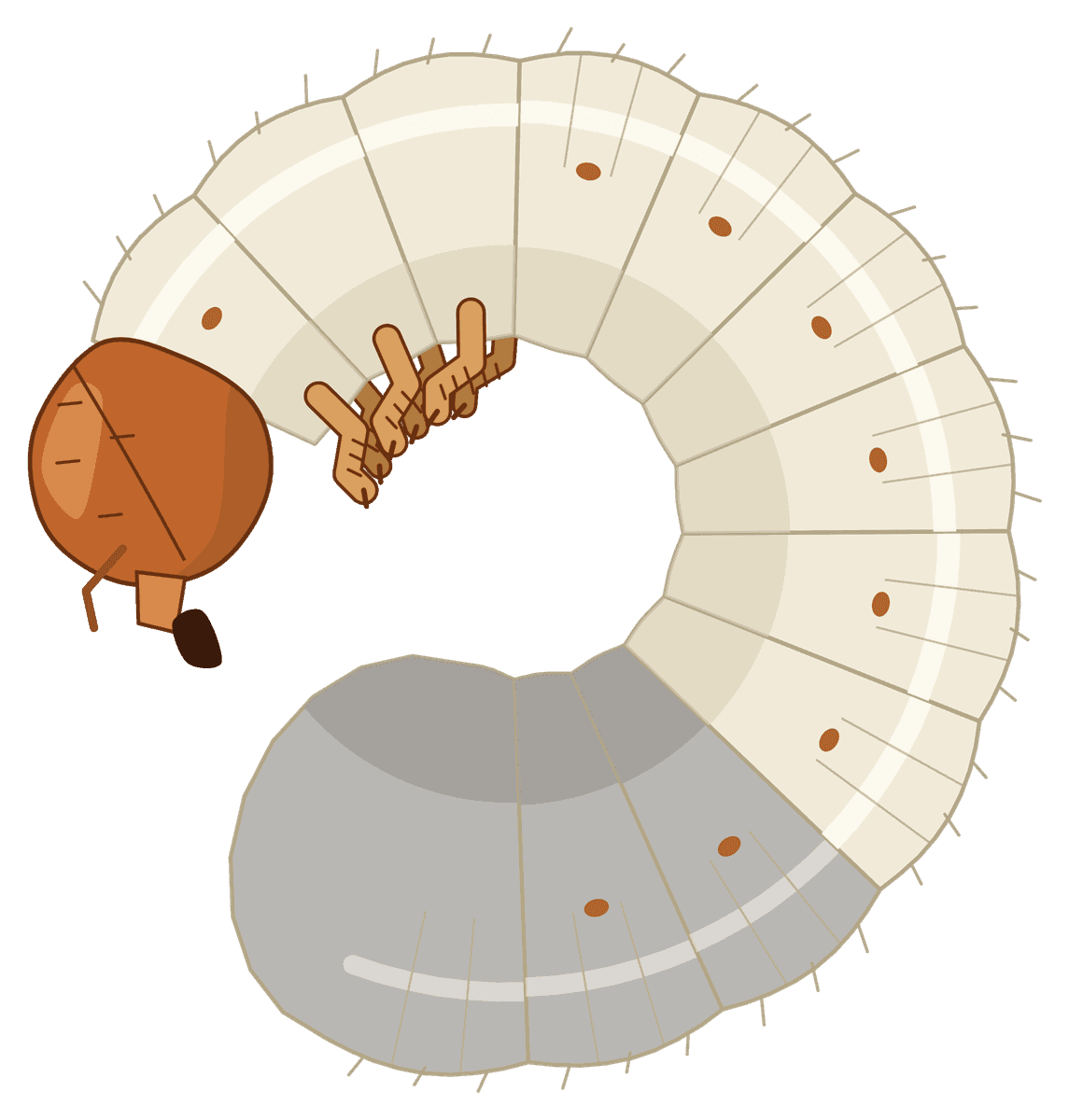
Scarabaeidae
Milky white, C-shaped larvae of Japanese beetles, chafers, June beetles, and other scarab beetles that eat grass roots and leave brown patches of lawn that peel back like a carpet.
White grubs are the larvae of scarab beetles (the Scarabaeidae family), including Japanese beetles, European chafers, northern masked chafers, rose chafers, May and June beetles, Oriental beetles, and Asiatic garden beetles. They're milky white and C-shaped, and you'll often see them as white specks in dark soil when you dig or till. That June bug knocking against your porch light on a summer night was a grub in your lawn not long ago.
Most scarab beetles, including Japanese beetles and chafers, have a one-year life cycle. The adult beetles lay eggs in summer, and the eggs hatch within a few weeks. The young grubs feed through the summer and fall, spend the winter in the soil, and feed again in early spring before changing into pupae and then new adults. May and June beetles are the exception: their grubs live in the soil for 2 to 3 years before they become adults.
You can tell the common kinds apart by the raster pattern, the pattern of hairs on the underside of the tail end. You'll need a magnifying glass and tweezers to hold the grub still. You don't have to know which kind you have to treat with nematodes, though: beneficial nematodes work on all types of white grubs. (Milky spore, on the other hand, kills Japanese beetle grubs but won't help against European chafers.)
White grubs feed on the roots of grass and ornamental plants, causing patches of brown, dying grass. A bad infestation can leave the lawn so damaged that you can pull it back like a carpet.
The damage is sometimes missed, especially in a well-watered lawn, until animals like moles, possums, skunks, and raccoons start digging up the lawn to eat the grubs. The adult beetles can also damage a wide variety of plants.
The beneficial nematodes in BioLogic's products hunt down and kill grubs in the soil. Killing the beetles as grubs stops the life cycle, so new adults don't emerge.
Heteromask works better than Scanmask against white grubs, but Scanmask is also effective. Heteromask is active in soil at about 68°F and above and becomes less effective in cooler soil, while the nematodes in Scanmask stay active down to about 55°F. (These are soil temperatures, which can differ from the air temperature.) In early spring, when the soil is still cool, Scanmask is a good choice.
Heteromask is our preferred product for all types of white grubs, but Scanmask also works. Apply it with the Nema-Jet Sprayer, a hose-end sprayer, or a watering can for small areas.
Treating in late summer or early fall is ideal, when the young grubs are small and most vulnerable. There is also usually a short window in early spring, before the grubs get too big and pupate, but it's narrower and harder to time. One application typically lasts about a year, and often longer. Treat again when you see signs of grubs coming back.
Focus on areas that show grub damage, the areas right around them, and sunny areas of the lawn. It's best, and cheapest, to treat just those areas: without grubs to feed on, the nematodes die off and the treatment is wasted.
See How to apply for step-by-step directions, or use the calculator on the Heteromask Spray page to see how much you need.
Our recommended nematode for white grubs, including Japanese beetle and European chafer grubs.
From $37.99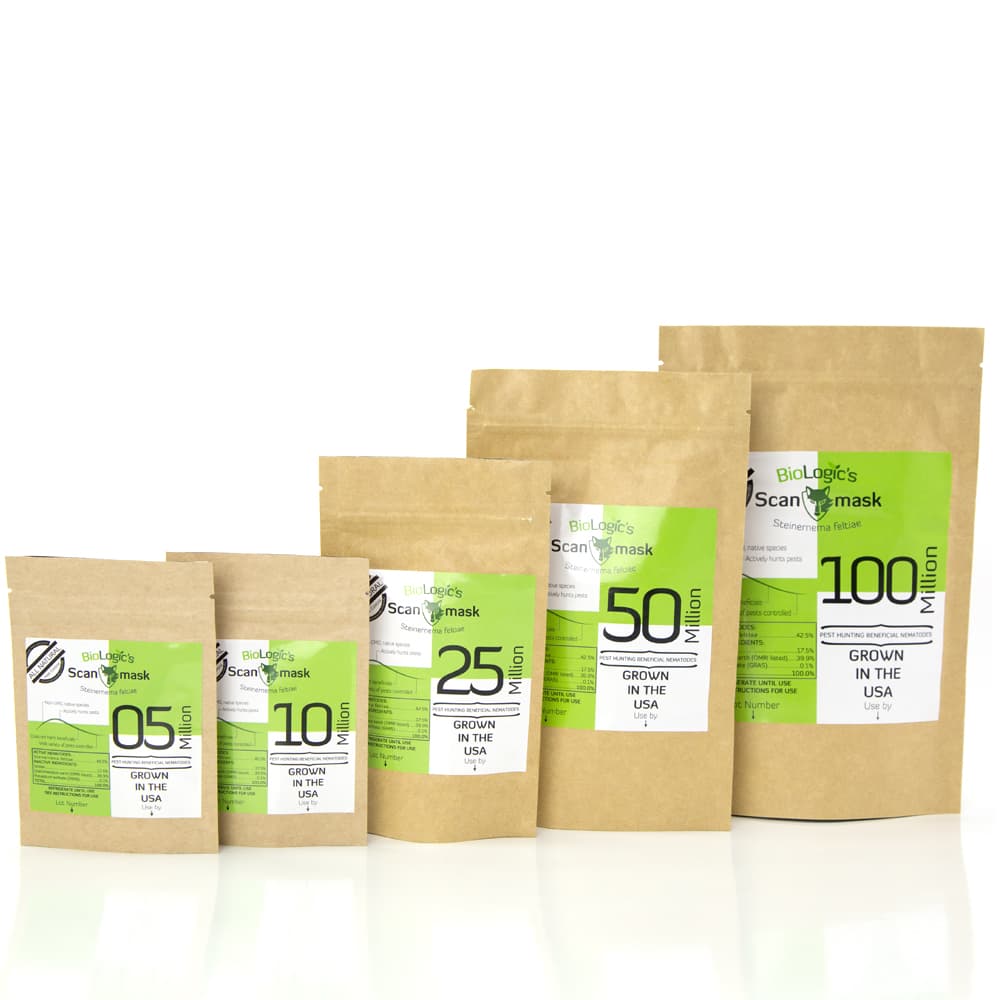
Kills the widest range of pests. Our pick for several pests at once or for preventing them.
From $37.99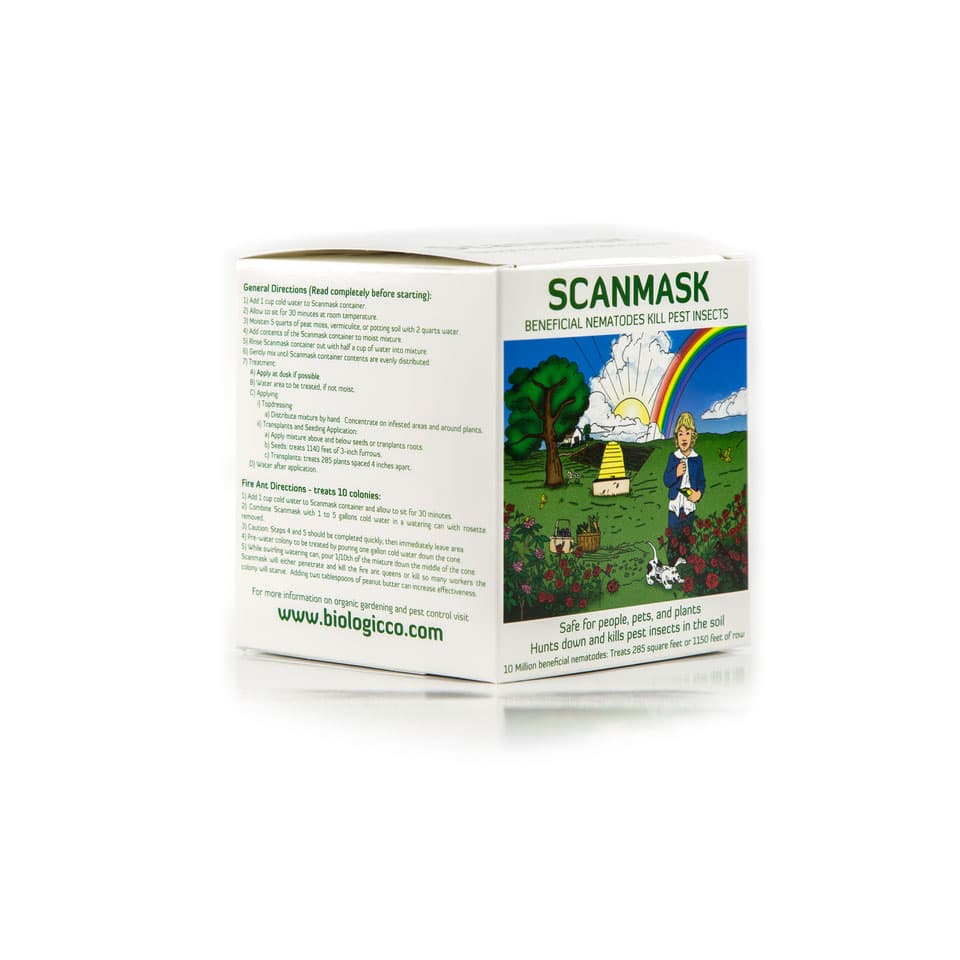
The same Scanmask we've sold since 1985, mixed with peat moss or potting soil and spread by hand. Keeps up to a year in the fridge.
From $42.99